

Discover how long a marketing automation setup takes, from single workflows to complex integrations, and the key factors that influence timelines.
A marketing automation setup takes about 4 to 6 weeks for most small and mid-size businesses in 2026, ranging from roughly 1 week for a single automated email sequence to 3 months for a full CRM-and-marketing stack integration across platforms like HubSpot, Salesforce, and Zapier. The cost most timelines leave out: cleaning and migrating existing contact data usually adds 1-2 weeks on top of the build itself, and that step is where most projects stall.
TL;DR- Marketing automation setup time runs 1 week to 3 months depending on complexity in 2026.
- Single-tool workflows (one email sequence, one form) finish in 1-2 weeks.
- Full CRM automation setup with HubSpot or Salesforce takes 4-8 weeks.
- Multi-platform integrations connecting CRM, ads, and Zapier run 8-12 weeks.
- Data migration and list cleanup, not the build, is the step that usually adds delay.
A slow marketing automation setup means leads sit uncontacted and sales reps chase manual follow-ups that a workflow should already be handling. Businesses that quote a launch date to their own team without accounting for data migration end up missing it by 2-3 weeks, which is the single most common source of frustration in these projects.
Most delays trace back to scope creep, not the tool. A team that starts with "just automate our welcome email" and ends up wanting lead scoring, deal-stage triggers, and a freelance HubSpot automation expert to build custom reporting on top of it has changed the project scope mid-build, and the timeline moves with it.
How long does a marketing automation setup take?
The honest answer depends on what "setup" includes. A single workflow is a few days of work; a full revenue-operations build across sales and marketing tools is a multi-month project. Here's how the range breaks down by scope:
| Setup scope | Typical timeline | What's included |
|---|---|---|
| Single workflow | 1-2 weeks | One trigger, one sequence, basic reporting |
| Full CRM automation | 4-8 weeks | Lead scoring, pipeline stages, multi-step nurture |
| Multi-platform integration | 8-12 weeks | CRM + ad platforms + Zapier + custom dashboards |
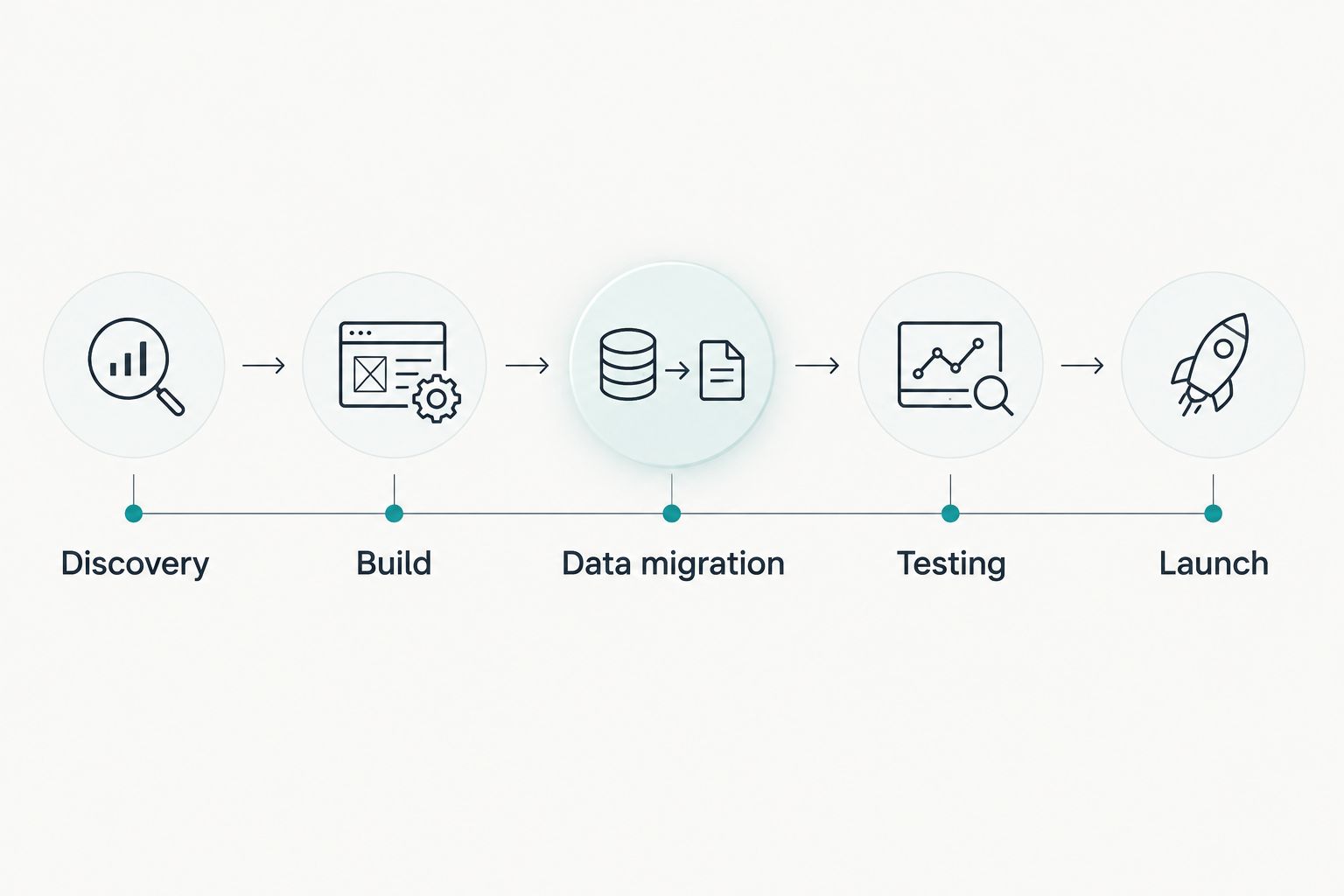
Each stage above eats into the total. Discovery and mapping the workflow logic typically takes 3-5 business days on its own before a single automation gets built.
Single-tool automation: 1-2 weeks
A single workflow — one welcome sequence, one abandoned-cart reminder, one lead-routing rule — is the fastest build. It requires minimal integration work because it usually lives inside one platform (Mailchimp, ActiveCampaign, or a basic HubSpot tier). Verdict: fine for a business testing automation for the first time.
Full CRM automation setup: 4-8 weeks
This is the range most growing businesses land in: multi-step nurture sequences, lead scoring, deal-stage triggers, and internal notifications built inside HubSpot or Salesforce. It requires someone who knows the CRM's workflow logic, not just email design. Businesses comparing HubSpot freelance experts for this tier should expect a scoping call before any build starts. Verdict: the right scope for most SMBs moving off manual follow-up.
Multi-platform integration: 8-12 weeks (2-3 months)
Connecting CRM, ad platforms, Zapier, and custom reporting dashboards is a project, not a task. Expect a dedicated discovery phase, a build phase, and a testing phase before anything goes live company-wide. Verdict: budget the full quarter, and don't run it in parallel with a CRM migration.
Why setup time varies
- Data quality going in. A messy contact list with duplicate fields adds cleanup time before any automation can trigger correctly.
- Number of integrations. Every extra tool connected through Zapier or a native integration adds testing time, not just build time.
- Internal approval speed. Workflows that need sign-off from sales, legal, or a founder move only as fast as that team responds.
- Custom reporting requirements. Dashboards built on top of CRM data (not the CRM's default reports) extend the build by 1-2 weeks in most cases.
- Existing tech stack. A business already on HubSpot moves faster than one migrating from spreadsheets, since there's no platform switch to manage mid-project.
- Freelancer vs. team availability. A specialist who works on the project full-time closes it faster than one squeezing it in around other client work — a factor worth confirming before hiring a CRM freelancer for the build.
Find a marketing automation freelancer
Browse vetted HubSpot, Salesforce, and Zapier specialists on Talent Tasker.
Browse freelancersHow long does HubSpot onboarding take?
HubSpot onboarding for a standard marketing setup takes 2 to 4 weeks on its own, before workflow customization is layered on top. That timeline covers account configuration, list imports, and basic email templates, not full automation logic.
Is DIY marketing automation setup faster than hiring a freelancer?
DIY setup is not usually faster once you count the learning curve on workflow logic and trigger conditions. A founder building a first HubSpot workflow alone often spends 2-3 weeks just learning the tool, time a freelancer with prior CRM builds skips entirely.
How much does a freelance HubSpot developer cost?
Cost depends on project scope and complexity rather than a flat rate, and it tracks closely with the timelines above — a single-workflow build costs less than a multi-platform integration. Check current rates and scoped quotes on the freelance HubSpot developer cost guide before budgeting a project.
Businesses hiring through Talent Tasker for a marketing automation setup should expect to submit project scope up front — single workflow, full CRM build, or multi-platform integration — so proposals come back with realistic timelines instead of a generic quote. Talent Tasker connects businesses with vetted marketing, CRM, and automation freelancers for exactly this kind of scoped, project-based work.
FAQ
How long does a marketing automation setup take in 2026?
A marketing automation setup takes 1 week to 3 months in 2026, depending on whether it's a single workflow or a full multi-platform integration. Most SMB projects land in the 4-8 week range.
What's the fastest marketing automation setup?
A single automated sequence inside one platform, like a welcome email or abandoned-cart reminder, is the fastest at 1-2 weeks. It skips the integration and data-migration work that slows larger builds.
Does data migration add time to a marketing automation setup?
Yes, data migration and list cleanup typically add 1-2 weeks on top of the core build. Businesses migrating from spreadsheets or a legacy CRM see the longest delays here.
Is a full CRM automation setup worth 4-8 weeks?
For a business relying on manual follow-up today, yes: 4-8 weeks builds lead scoring, deal-stage triggers, and nurture sequences that run without daily manual work afterward.
How much does a freelance growth marketer cost for automation work?
Cost varies by project scope, not a flat monthly number. Check a scoped estimate on the freelance growth marketer cost guide before comparing freelancers.
Can a freelancer finish a marketing automation build faster than an in-house hire?
A freelancer with prior CRM builds usually starts faster since there's no ramp-up time on the tool itself, which can shave 1-2 weeks off the front end of the project.
Should I hire one freelancer or an agency for automation setup?
It depends on scope: a single-tool workflow rarely needs an agency, while a multi-platform integration with ongoing reporting may justify a small team. Compare both against project cost and timeline needs.
One last thing
The stage nobody budgets for is testing: sending a live workflow through every trigger condition before it touches real leads. Skipping it is the fastest way to turn a 6-week build into a 9-week fire drill after launch, so build in a dedicated testing window rather than treating it as a final checkbox.
Related guides
- How much does a freelance HubSpot developer cost
- Is a freelance growth marketer better than an agency